Showing posts with label DIY publishing. Show all posts

Monday, 1 March 2010

To ISBN or not to ISBN?

Previously, everybody who published a book thought of ISBNs as a must have. For a start, before the copyright libraries got totally overwhelmed with works (some drivel, and others so poorly made that they needed to be held up with an elastic band), bookshops only stocked titles that had them. Now however, sure Waterstones will only stock them if you have one. But who buys books that aren't travel guides or the latest t.v. promotion, 'celebrity' ghost-written books or recipe books in Waterstones? Most of the independent or smaller bookshops are increasingly hard to find and hard pushed. Certainly some famous ones strong on a certain type of book (radical, poetry, cookbooks or whatever) survive, but tend to be specialists. A friend of mine has published many books, and stocks them in Waterstones, where they only ever shift if he holds a signing or related event.
Also, what guarantee have you got that the big retailers will stock (never mind sell) them when you have to badger their distributor first, and they may turn you down anyway?
People say you have to have an ISBN to be stocked on Amazon. This is true, but how many small press publications have you bought from Amazon lately? And what of the cut they take? True they stock obscure and wonderful books you can't get elsewhere, but most of those I buy, for instance, tend to be by authors known in classic circles, like Cocteau, or Kandinsky. And if I do want to buy a poetry book by a fine author whose collection isn't in the mass media's narrow circles a lot, (say James Turner's 'Forgeries') then I already know enough of either author or publisher to contact them directly to buy my copy knowing that they'll get more of the money than if I'd gone through Amazon!
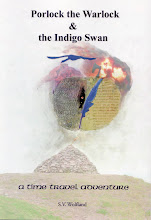
If someone's heard of The Books of...Trilogy, it would be surprising if they also didn't know of either my name or that of the Cartwheels Collective & Publishing arm. Anyone looking up 'Porlock the Warlock' on Google should get the Cartwheels Collective website and hence Webshop. Why bother with Amazon? The same goes for Barnes & Noble.

Most people don't need the 10 ISBNs you have to buy for £110 plus £18 postage. In their dreams they might, but other friends of mine who have bought 10, they have helped sell no copies at all and they've only ever used one. Cartwheels Collective Publishing has eight titles out (well, the last one will be available in a couple of weeks) and two more in the pipeline. It was at this point that we were always going to review editorial policy as to ISBNs. We've thought about it and rejected it - indeed my co-editor is at this moment writing a piece about the decision on the Cartwheels Collective Publishing google site.
People have got to hear about your work (and it should be work) because of your efforts. ISBNs are not a magic bullet to help shift copies. Once sales are comfortably at the next level, then they will have been issued along the way - when to bother will be self-evident. But starting selling books in limited editions, and the way you get people to know about them is at events, small mags, recommendations, word of mouth and via the web - including (see the last post) tools like Facebook. Never ever expect ornamental accessories from a vanished past like the ISBN (and when it did make a book stand out simply because there were less of them) to do the work for you.

Since ISBNs have effectively been privatized (they are now run by Nielson Book Data), it has become about making money out of book publishers and authors not for book publishers and authors. Hence the end decision of CCP's editorial board not to have them.

An independent publisher with an explicit 'no ISBN' policy is Magic Realms Publications. Check out their well argued case at;
If ISBNs have done you any favours, I would love to hear from you! Either via comments below or by e-mailing.

Works referred to;
James Turner's 'Forgeries'

The Books of...Trilogy;

Tuesday, 23 February 2010

Gathering Momentum

It's been all go - the nightmare of proofing or at least having another proof read of, Cartwheels Collective Publishing's latest book, a Brief History of Justice, has been continuing, as author and printer negotiate what went wrong with the galley proofs. As I've observed in previous blog entries, no one publishes a book without being crazy or at best prepared to deal with a lot of stress. So another morning has been spent changing the layout and font of the main text, which in turn necessitates changing all the page numbers...for some 67 chapters...plus the prelims...and then noticing with horror that the last chapter doesn't seem to have been proofed at all! so of course, it has to be done too...Never mind finding those places where a word has been put into 'find and replace', and of course the computer has found a word within a word - say 'rent' in 'apparently' and changed them all regardless so you get a word like 'appatornly' as it takes out the said rent and replaces it with a 'torn' just to use an example. Printing a book is a nightmare, and printing a philosophy book, with all its complex use of language and names of philosophers and philosophical terms, (even in an accessible book of short essays!) is doubly so. Expect a deal of shouting and wondering how your co-editor could possibly have missed this or that.
The answer is of course you/they did. Kant's 'Critique of Pure Reason' or J.R.R. Tolkien's 'Lord of the Rings' spent years, decades indeed before all the typos were gone - a single work, especially over three hundred pages or four hundred pages long will suffer from such mistakes until printed more than once, possibly more than several reprints. It's far too big a task for anyone with three jobs, or for two people with three jobs, to ever get right first time. But the thing is that it is getting done.

Despite (as I've also written before) the easy bit being the writing, the printing being the nightmare, and the actual selling the real hard work, I'm looking forward to seeing a shiny new book by the press ready for sale.

Thursday, 8 October 2009

Publishing a Second Edition

Well, the second edition of the Porlock novel has been sent off to the printers at last and it's too late to change any errors now... Decisions, decisions. The first cover was rather too dark and emphasized the sci fi aspect, so the second by contrast is probably too pale, but at least concentrates on the historical side - which is the main thing. But I'll almost certainly quarrel with it once the boxes of books arrive.
   It's a queer business publishing a book. One always imagines in the abstract that of course you'll have time to proof read it the requisite three times, not just the once over an intense and irritable fortnight. You think that of course you'll print out the cover to see how it looks BEFORE sending it off to the printers. You believe in good faith that the second edition will have no typos. Forget it. Unless you only have one job (rare in the arts at the moment, seemingly!) and have the time management skills recommended by 'life coaches', there'll be one proof read. If you haven't the experience yourself of doing that and done it for other people, then it's best to try and cajole/coax/pay someone else to do it. Even if you are good at it, and don't farm it out, it's extremely unlikely that one proof will pick up everything, and even if the typos aren't there, there'll be spacing issues leftover from transferring the document from Word to PDF, and changing the size from A4 or 5 to a standard book size like 132 x 197. Of course it would be great to actually have time to go through the first edition and make all the changes you'd like before the second one...well yes it would, if you hadn't been so busy selling the first one and doing all your other jobs from writing workshop host or assistant willow workshop host to dealing with festivals and... Printing the cover out to see what it looked like would have been great, and of course you will next time...except that the printer doesn't do 132 x 197, or at least not without throwing a tantrum which you really can't face at this stage. Not with a newsletter to edit and... You get the picture? In reality the second cover may well be as 'too something-or-other' as the first, and by the third print run, you may actually have had time to do another proof...hopefully. Because being your own proof reader, editor, page layout designer, typesetter, promoter, marketer, copywriter, rep, bookseller, and having at least two other jobs is always going to get in the way. As for a book that you know perfectly well has typos - surely it's too much for a perfectionist to bear? Not if you're paying for the corrections and are quoted a ludicrous price, and then only quoted five pence a page when it's far too late... - no one's yet minded if they've noticed, and anyway it's imperative to have stock to sell at an imminent event - getting it done vs. perfection? The choice isn't hard at that point. Especially not when one thinks of all the things that never got done because they couldn't be or would take too much time to be, perfect. It's a recipe to cripple an art, a job, or even a life. Of course you should always do everything the best it can be, but if no one's going to notice except yourself, and it's between getting something done or not doing it...No contest.
   It's obvious why folks publish their own work and set up their own companies in an overcrowded market filled with ghost written 'celeb biographies'. But what's also plain are that the roles which publishers and agents do execute take time and effort. And if you'd 'rather spend the time writing', then firstly, don't expect to get published this side of doomsday unless you send out two MS.s a day, and secondly - you never know, the many other tasks involved might end up teaching you a whole load of new skills, and there might even be some fun in amongst the hard work. What's more, you'll be doing something you believe in. Does that have a price?  

Friday, 24 July 2009

Publishing a Book – Part 2

   Nobody can truly learn from another’s experience in the way that people mean when they say ‘I’ve suffered so you don’t have to’. But by hearing what the person in question has to say, they can, I guess, at least make some kind of judgement. People have asked my advice, or what I think from time to time about writing and publishing a book (or books) as someone that's done so. So here’s a summary. Writing the book is easy. Of course you need to have reasonably mastered a good to excellent standard of spelling, grammar, character, plot, technical or experimental competence. To have an idea, a passion to write, or rather to write actively. And of course to have finished the damn thing. But that part – if you are a writer, i.e. you write because you must – is the simple part. The proof reading, editing, back cover blurb writing, page layout, page numbering, prelims and all the rest is the really dull grinding bit. The printing is the really stressful bit…And the selling is the actual hard work.

   So what does the real hard work that now begins, involve? You ring shops, venues, places that may or should be interested, T.I.s for local interest links, museums if it’s a historical novel; only some are interested, some (overloaded with such enquiries) aren’t even polite! Some will take it, but on terms where you make no profit…You spend the next months delivering books, designing posters, putting them up, handing out flyers, trying to remember to take books with you wherever you go. When the weather’s not too cold or wet and when you’ve time from your other commitments, you hold stalls, make free gifts and give them away, make more signs, outdoor ones this time, put the price up when you realize how little you’re making for the sheer work you’re putting in… You write or e-mail and tell anyone acknowledged in the credits perhaps, for instance thanking them for inspiration – don’t expect a reply! It’s polite to tell them you’ve mentioned them, but well known authors/broadcasters or whoever are notoriously busy, and it could fall by the inbox. A good idea is tell the local rag and write some interesting copy for them – they may well take it. Many say it’s good to have a working relationship with whoever deals with local events news on the said paper regarding any signings and stuff. In my experience though, most of the publicity you’ll have to do yourself, but a mention in the paper does help.

   Next is organizing events at which to promote and sell the book – whether signings and readings at bookshops (if you’ve opted for an ISBN) and have persuaded some bookshops to take it, or events which are basically shows, at which you sell the book at the same stall you have for the programmes and any other merchandise. One writer I know had some fantastic t-shirts on sale for a winter tour of one of his books! So for the event/s in question, there are the tickets – a box office or printing them yourself? Flyers, more posters, cards, rehearsals, checking technical stuff like sound and any lighting…spamming people you know, know of and hardly know, a notebook so people can join your ‘mailing list’ if they wish…and a load of other tasks that properly belong to a performer’s blog. Even after all this – once you’ve put some in shops which take all the profit – and taking into account everything from a folding table to new printer ink at a £160 a shot for a decent laser printer cartridge – you’ll have to sell all of the first print run to break even. The question you then must ask yourself is – can you face a second? Time to sit down and work out the maths of costs; if you broke even, made a loss, or profit… Then looking at the issue of a bigger print run vs. more travel to more events to sell it, and…..

   Remember – the first print run may have been a success, but some at least were sold to people you know…the second print run will be mostly sold to strangers. Yep, that’s right – it’s going to be even harder…the one thing that will make it easier is all the stuff you learned during the first print run.

   I guess that may answer the question - how come the average sales of a self published book are 100-150… And the next question must be not - how come more people don’t publish their own books, nor how come so many do, but how many go on to the second print run…..?

Publishing a Book – Part 1

Rather than – why do more people not publish their own books, especially if they’re not happy for whatever reason with the state of mainstream publishing? surely the question should rather be – how come anyone (who isn’t rolling in cash) publishes a book themselves?

   Publishing a book in one way has never been simpler – there are print on demand and small print run printers and publishers everywhere, all offering different deals and services, from basic binding to ISBNs to listings on Amazon to claims to market them for you – the works. In another way of course, it’s just as hard as it’s always been. The simplest deal of all is just getting someone to print and bind it. That leaves you with editing, proof reading (sensationally dull for a 200 page book), page layout (try it on pirated software! For the full ‘I’ll get a hammer to that machine yet…’ effect), book cover design (if you’ve mastered a graphics programme or are lucky enough to know someone who has) with all the ‘no, left, no I’d like a terracotta wash, can I change this bit?’ ‘NO!’…prelims, page numbers (they’re always good for a laugh!). Next come the PDFs, putting it all, back cover, spine, the works, into two or three Print Ready Files. If the format still looks the same, congratulations! And remember, the cover must be sized to a standard book size like 197 x 132…not forgetting a 3mm ‘bleed’ all the way round for binding – so don’t bother with a border unless you’re feeling sharp as a needle. Then off the PDFs go – after shouting matches, breaking glasses, and if you’re really in mayhem central by then, somebody you know chooses one of the most stressful days of the year to hassle you about something…thereby ensuring you have a seriously memorable day, the first time you send off a book for proper grown up binding…

   Then a bit later on, the proof copy arrives and you see for the first time (all printers being different) that the cover is too dark/blurred/unrelated to the contents of the book…and of course, there’s no time to change it, AND you’d be charged for it, so because you’re doing this with minimum time and a fixed budget, you don’t. But it does show you at least that all your page numbers are all on the right – yes, even the pages on the left…so you sort that out, after more cursing and tearing up paper, and then send it off back again… A couple of weeks later a box of books arrives.

   For extra added enjoyment, sorry nightmare, get 10 ISBNs – the majority of which you don’t need right now, give away some free copies to copyright libraries and fill in forms for Nielsen BookData… But for smaller print runs, and especially ones which will mainly be sold at events, opinion is divided about whether an ISBN is worth the bother or not. I’ve heard some writers say they wouldn’t be without them. Some say it helped promotion, if not actual selling of copies. But others I’ve spoken to have said it was a waste of money and did no good at all. Take your pick. Think about what it is, who and where it’ll be sold to and at.

   And THAT’S just the beginning. Because it’s at that point that the real work begins – that of selling it. Now you’ve got the box of books, you’ve got to get rid of the contents…..